
I knew my Mathematical Science Diploma would come in handy one day! 🤣
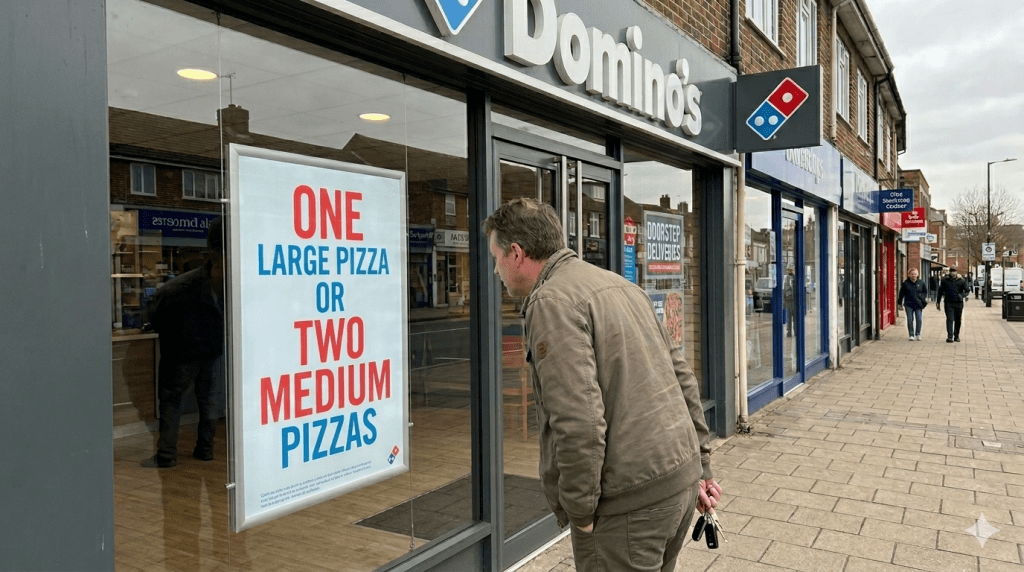
We’ve all been there, staring at a takeaway menu trying to get the best bang for your buck. Do you get two medium pizzas or do you go for the big one? It feels like a safe bet to assume that two 8-inch pizzas are basically the same as one 16-inch, right?
Wrong! In fact, if you think that, the pizza industry is basically winning at your expense and I have lost count at the number of people who fall into this trap.
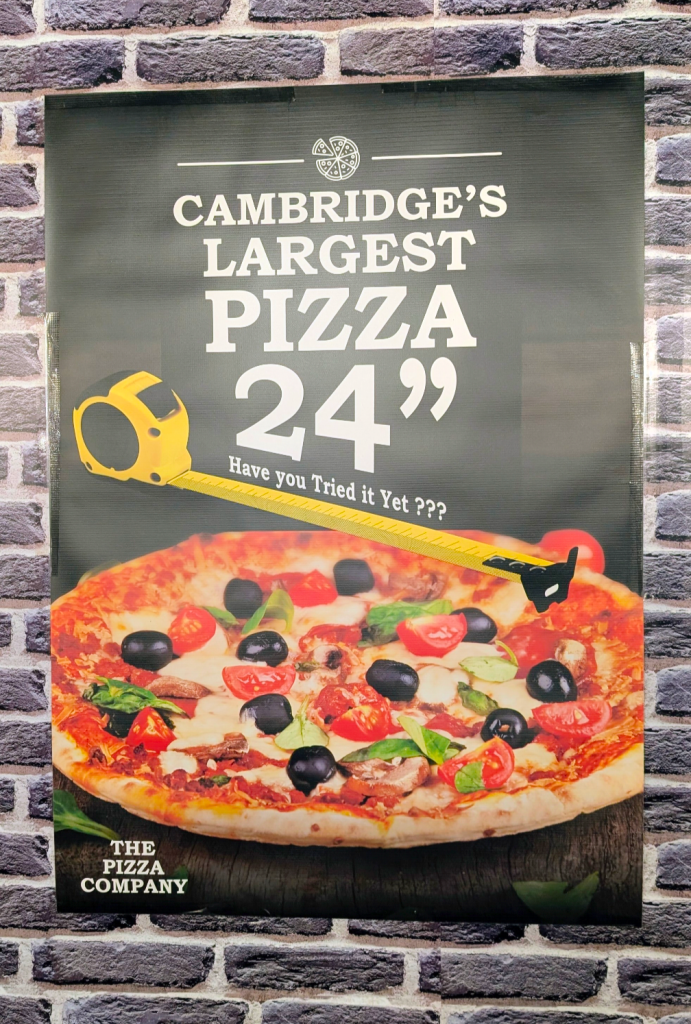
I recently popped into The Pizza Company on Mill Road for one of their legendary 24-inch pizzas. This thing is an absolute monster and apparently a go-to for hungry hospital wards at Addenbrookes Hospital and teams at Microsoft HQ – and I can see why!
Pizza Maths

But what makes it so special? Here, I am going to explain the maths behind what makes this behemoth such a weapon of mass consumption!
Our brains are programmed to think linearly. If you add an inch, you get an inch. Simple. But pizza follows the rules of geometry, and geometry is a cruel mistress. Because a pizza is a circle, it grows exponentially. To find the surface area, we use the formula:

In this equation, r is the radius (half the diameter) but because the radius is squared, even a small increase in the width of the pizza leads to a massive jump in the total amount of dough and toppings you are getting.
Let’s look at the classic “Two 8-inch vs. One 12-inch” dilemma:
Two 8-inch pizzas: Each has a radius of 4″. The area of one is 16 • pi (about 50 square inches). Two of them give you 100 square inches of pizza – not bad!
But one 12-inch pizza has a radius of 6″, so the area is 36 • pi (about 113 square inches) – much better!
Even though 8 + 8 is 16, a single 12-inch pizza actually gives you about 13% more surface area than two 8-inch pizzas combined. You have been choosing the “deal” and getting less pizza.
The 24-inch Beast from Mill Road

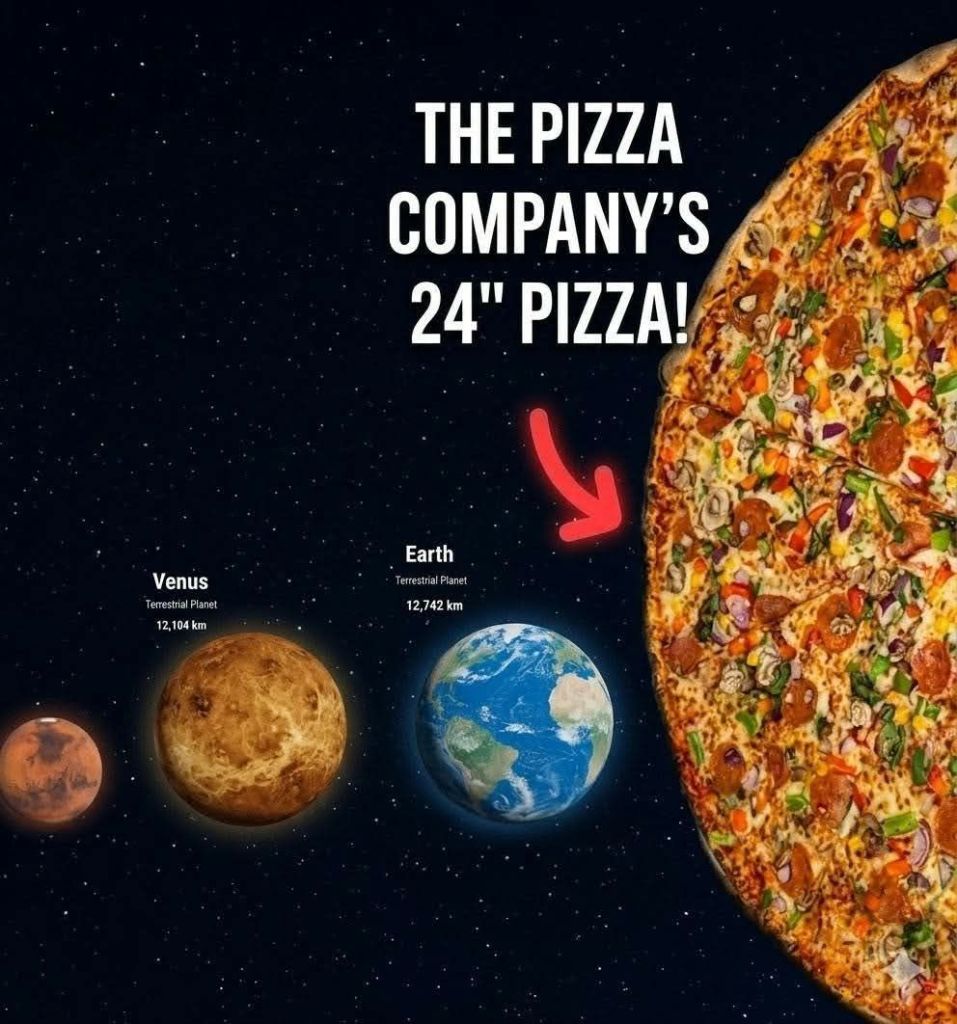
Now, let’s apply this to the monster at The Pizza Company. A 12-inch pizza is a standard “Large” in most places, so you might think a 24-inch pizza is just twice as big.
Not even close.
Doubling the diameter actually quadruples the amount of pizza.
• One 12-inch pizza: ~113 square inches 🤔
• One 24-inch pizza: ~452 square inches 😱
To match the amount of food in that one 24-inch box, you would have to order four standard large pizzas. It isn’t just a “big pizza”; it’s a four-course meal disguised as a single disc of cheesy joy.
The Savings!
To really put this into perspective, we have to look at what you are actually paying for. If you think grabbing a small 9″ pizza for £13.69 is a “lighter” option for your wallet, you are effectively being taxed for not having a bigger appetite (Simon always recommends you order as big as possible! 🤣).
A 9″ pizza has a surface area of about 64 square inches, which means you are paying roughly 22p for every square inch you eat. Now, compare that to the 24″ monster. At £38, it sounds like a lot of money up front, but it covers a massive 452 square inches.
When you crunch the numbers, the 24″ beast only costs you about 8p per square inch. That means the “sensible” small pizza is actually more than two and a half times more expensive per bite than the big one. You are essentially paying a 150% markup for the privilege of not having to carry a box the size of a coffee table home.
I’m planning my return to tackle the 24-inch monster soon. I might need to bring a calculator, a few friends, and a very large pair of trousers.
Cambridge Foodies now get a 20% discount on orders over £20 at The Pizza Company & Gourmet Burger & Fries on Mill Road and The Grill Brothers and Wing Brothers on Newmarket Road! (code: foodie20)














You must be logged in to post a comment.