

If you are looking for the pinnacle of fine dining in Cambridge, then look no further than Restaurant Twenty-Two.
Some of the best things in Cambridge are hidden in plain sight, and Restaurant 22 is the perfect example of this. It sits within a Victorian townhouse on Chesterton Road that you could easily walk past without a second thought, but inside, it is producing some of the most extraordinary cuisine in the county. It is a place respected by locals and sought after by tourists alike. I have meant to visit for years, and honestly, I feel a little embarrassed that it has taken me this long to finally get through the door.

What Sam Carter and Alex Olivier have done since they took over in 2018 is actually quite unique. They haven’t tried to turn the place into a clinical, ultra-modern concept restaurant. Instead, they’ve just embraced the building’s original 1892 roots. You’ve still got the stained glass and the original fireplace of a Victorian home, but the food coming out of the kitchen is operating on a totally different level. It is the kind of cuisine that makes a Michelin star look less like a goal they were chasing and more like something that just is, because it should be.

The Menu
The menu isn’t some generic cookie-cutter list you’d expect to find at many other fine dining spots. Yes, the dishes are seasonal and varied like the others, but there were numerous items that had me making enthusiastic ‘interested noises’ out loud, leaving me genuinely excited in anticipation with what is about to head my way – something I rarely do in these sorts of establishments. What I thought was impressive is how the menu moves between incredibly intricate dishes and moments of pure, simple comfort. Even by reading the menu, I never felt like the kitchen is trying too hard to show off; instead, they just let the quality of the produce or story behind it do the talking
A dining experience
At £150pp, the full tasting menu is certainly an investment, but you are also paying for the time. The meal takes about two and a half hours, which actually forces you to slow down and properly appreciate what is being put in front of you. It gets you away from that “eat and leave” habit that many of us are guilty of (myself definitely included) and actually makes you savour the experience at a steady pace. In that sense, the meal isn’t just a part of your evening – it is the evening.

I also enjoyed the illustrations by local watercolour artist Naomi Davies that proudly displayed the supplier list in a fun and playful way. It was the start of many examples where Restaurant 22 demonstrates their commitment to supporting the local community.
The appetisers

The meal began with their signature Gordal olives, which you will also find at their sister restaurant, Margaret’s. Often called “The Fat Ones” in Spain, they definitely lived up to the name, being huge, green, and very fleshy. They provided a sharp hit that immediately woke up the palate and served as a great way to start before the more intricate snacks arrived. Because they were pitted, you could just enjoy the firm, meaty texture in one go. It’s a refreshingly simple way to open a menu, letting the quality of the produce do all the talking before the more complex dishes arrive.
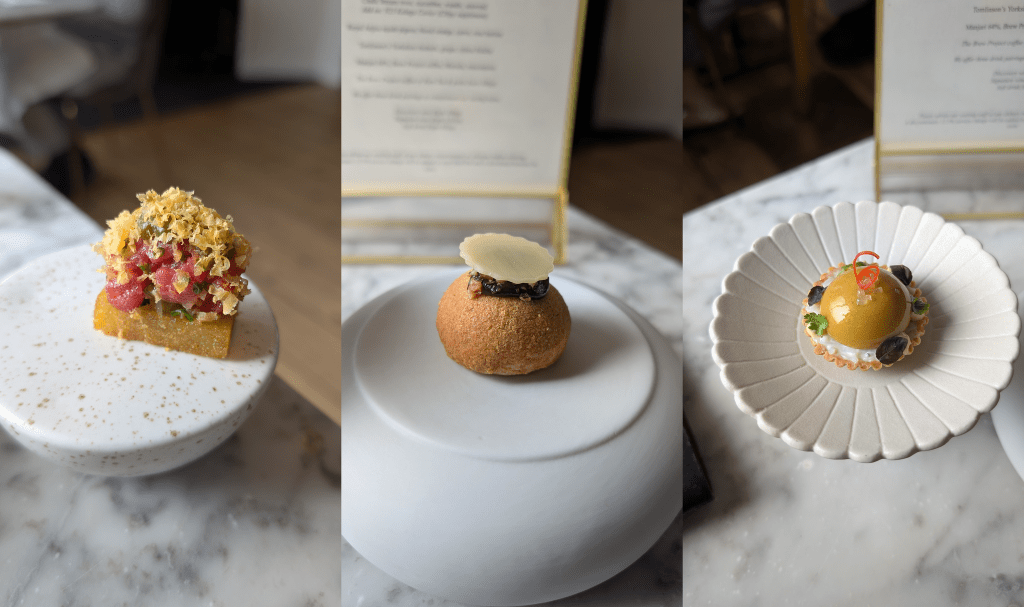
Following the olives, the next three appetisers arrived as a brilliant sequence of contrasting textures and flavours. Each was colourful, interesting, and uniquely different, clearly chosen to give my palate a vigorous warm up before what was set to follow.

First was the savoury cheese gougère using Old Winchester and a pickled walnut. This is a favourite amongst the regulars at Restaurant 22, loved for its thick, gooey, and punchy cheddar that hit hard against the buttery pastry. It is a firm reminder of the brilliance of British cheese that is quite rightly conquering the world at the moment.

This was followed by the Yorkshire shorthorn with gherkin and cured egg yolk, served on a beef-fat crisp potato rösti. This is steak and chips as you have never seen it before; so colourful and intriguing that I questioned whether it was even the dish it claimed to be. However, that single chomp opened up the exact flavours it boasted, providing layers of crispy, gooey, and crunchy texture all at once, which brought everything to life and reminded me exactly why I was there – amazing!
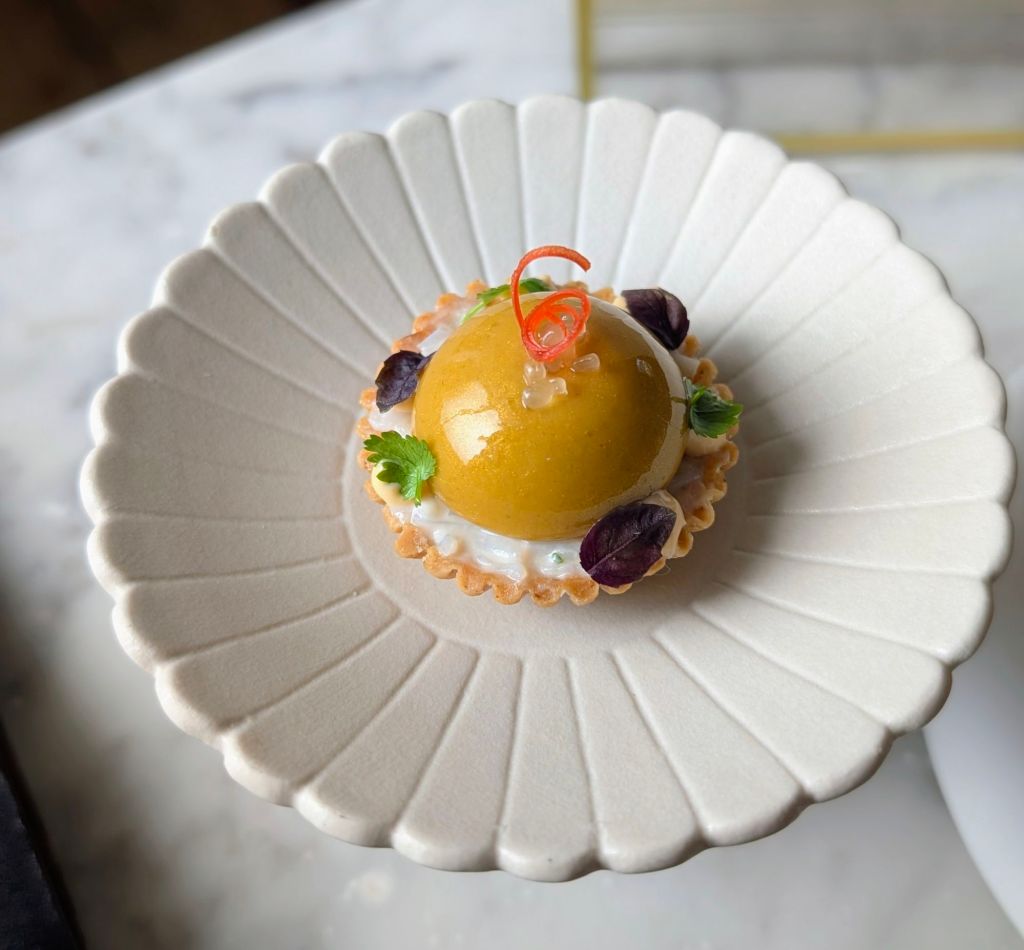
To finish the set, the Brixham crab with kaffir lime and satay delivered a varied and complex flavour that I could not quite put my finger on, though it provided a subtle smoky-sweet taste with a delicate zesty pop. It is designed to be eaten quickly in one go because it essentially pops like a bubble, and as someone who can be a bit funny with crab, I was entirely won over.
The Sourdough and the French Laundry
The sourdough baguette has one of the best backstories in the city. It was shared by Jamie Houghton, who actually lives right here in Cambridge but happens to be the Pastry Chef at the world-renowned, three-Michelin-starred French Laundry in California. The dish has been nurtured by the kitchen team here ever since and the result is a sourdough with a proper, thick crust and an incredibly soft, airy middle. It is served with a classic salted Bordier butter and a whipped Bix – a luxurious triple-cream cheese from Nettlebed Creamery.
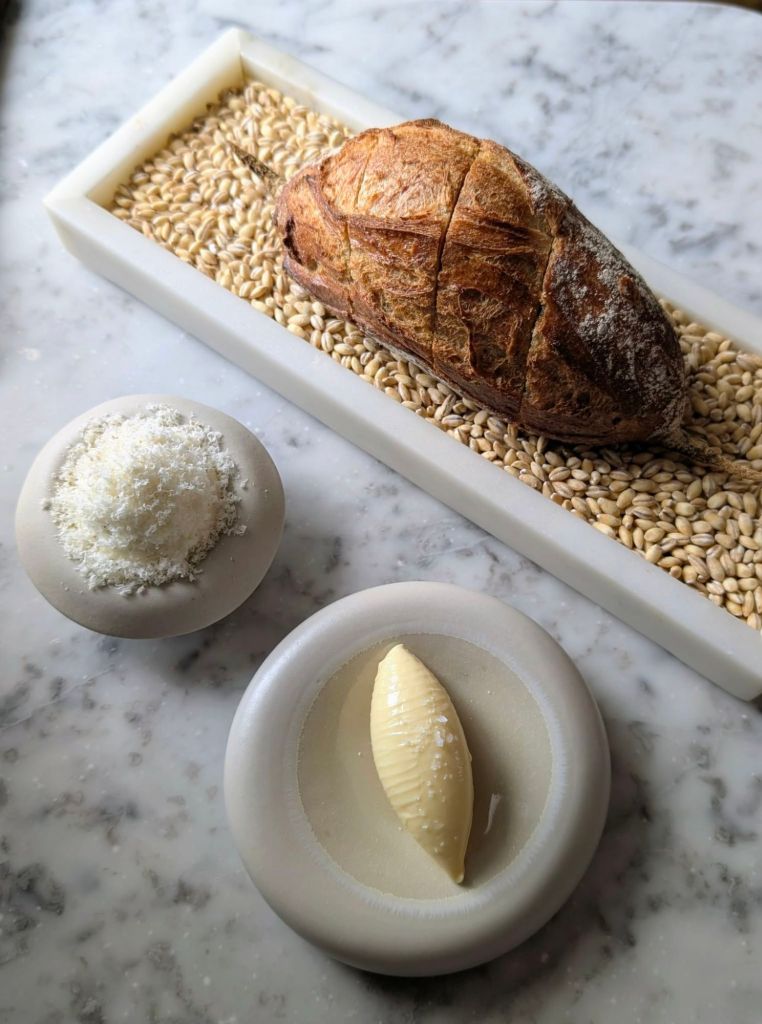
The Bix is the standout for me; it is incredibly creamy and indulgent, with a slightly garlicky flavour. This is a perfect example of what I mentioned earlier, that Restaurant 22 doesn’t feel the need to overcomplicate every single plate. Instead, they take a simple dish like bread and butter and, through sheer quality and a bit of local connection, elevate it into something world-class.
The Flourish Leek
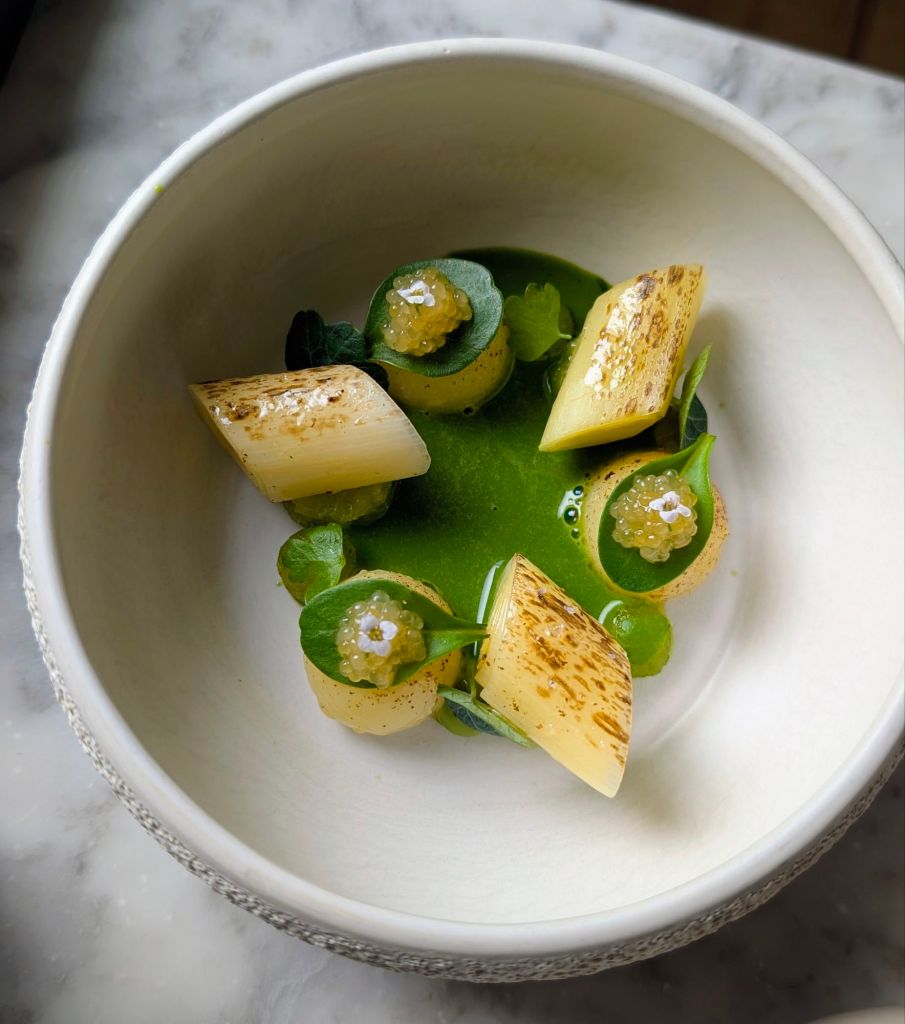
Next came a dish featuring heritage leeks from Flourish Produce in Hildersham. These were barbecued until sweet and soft, then paired with pink fir potatoes and a blend of lemongrass, lovage, and jalapeño. It was finished with Swedish pike roe smoked over beech and birchwood. It is an impressive bit of cooking that takes a relatively humble ingredient and makes it feel world-class.
The Audley End Estate Hogget

The main course featured hogget from the nearby Audley End Estate. For those who do not know, hogget sits between lamb and mutton. The star of that plate was a hogget cannon which was confit in lamb fat to keep it intensely succulent. The texture was remarkable; in fact, it was so soft that it would spring back like a memory foam mattress if you poked it with a fork (wait for our Instagram video to see it in action).
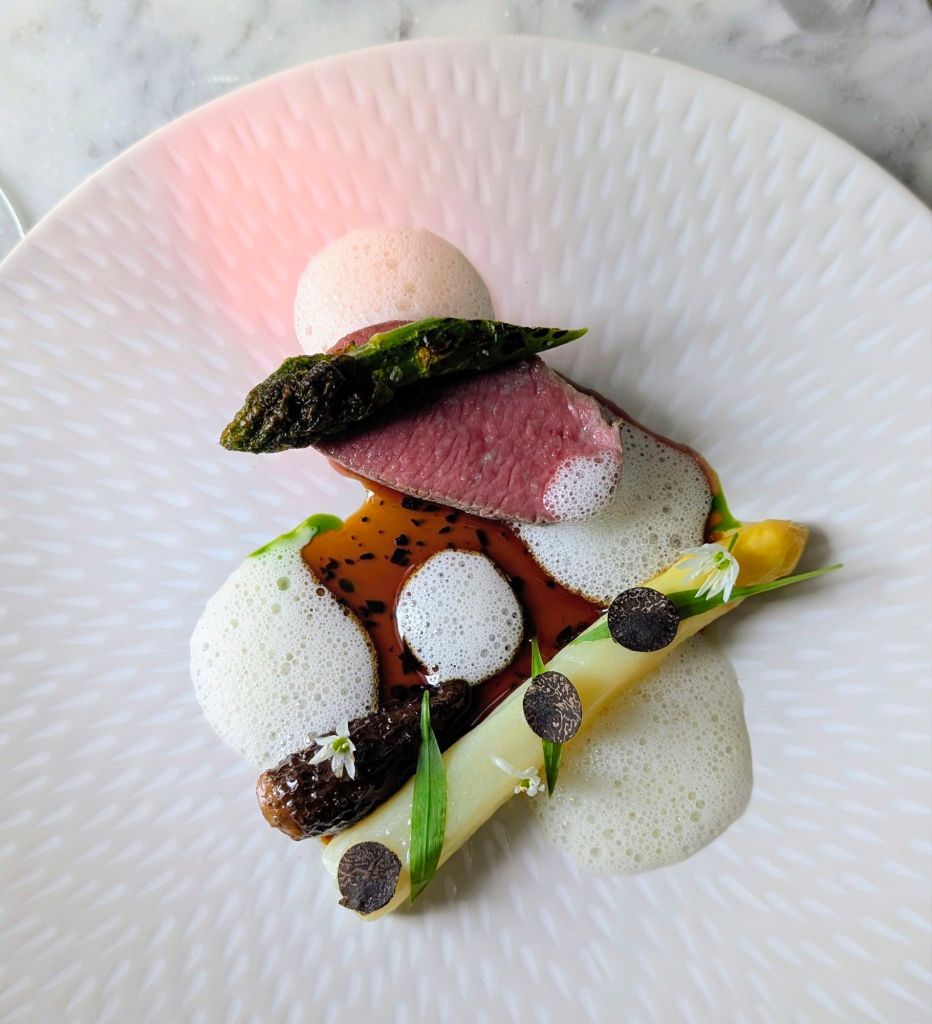
In a clever bit of “nose-to-tail” cooking, the morel mushrooms were stuffed with hogget trimmings. This ensures there is no waste with the quality ingredients being used. It is served with both charred green and white asparagus; the white spears are grown underground without sunlight, giving them a more delicate, floral profile compared to the green ones. The dish was finished with wild garlic and garlic flowers, all tied together with a glossy lamb jus and shavings of winter truffle from the end of the season. It was a dish that felt deeply connected to the landscape and paired perfectly with the Simpson’s red wine that followed.
Championing English wine

One of the highlights of the drinks pairing was a red from Simpsons Wine Estate in Kent, sourced through the local Cambridge merchant Grape Britannia. It was light, dry, and incredibly smooth, with a refreshing body that carried distinct notes of strawberry and cherry(?). It had a lovely tang to it and worked well with all the dishes throughout the meal, particularly the hogget. As someone who has spent 17 years promoting the local restaurant scene, seeing them champion English wine like this really resonated with me on a personal level. It is one thing to talk about supporting “local,” but seeing a Michelin-starred kitchen put their full weight behind a British vineyard (and choosing to source it through a specialist merchant right here in Cambridge) shows a genuine commitment to the industry. It isn’t just about the food on the plate; it is about the whole ecosystem of regional producers and city-based merchants that keep the Cambridge food scene so vibrant.
The River Test Trout
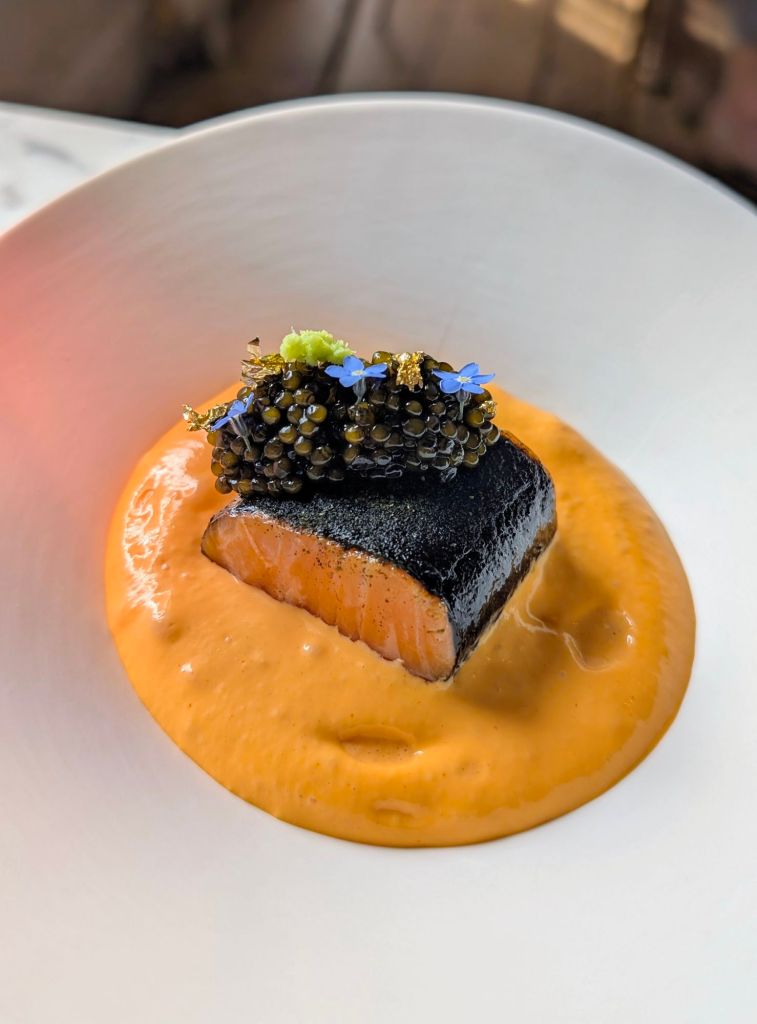
The next course was the British chalk stream trout from Hampshire. Chalk streams are incredibly rare (there are only about 200 in the entire world) and 85% of them are right here in England. The water rises from underground aquifers and is naturally filtered through layers of chalk, resulting in a mineral-rich, “gin-clear” environment. For the fish, this constant flow of clean, oxygenated water means they are constantly swimming against a current, which builds muscle and results in a remarkably clean, lean flavour without any of the “earthiness” sometimes found in pond-reared trout.
From a sustainability standpoint, it is a world away from intensive sea-farming. The trout are raised in land-based flow-through systems that mimic their natural habitat. At Restaurant 22 the “zero-waste” approach is front and centre, with the sauce being a rich sabayon made by reducing the trout bones and trim, ensuring no part of this rare resource is wasted.

The trout loin was wrapped in seaweed and topped with a supplement of N25 Kaluga Caviar. Having those large, firm pearls sitting right on top meant you got that immediate clean savoury pop of salt before reaching the fish, which was remarkably soft and carried a subtle, clean hint of smoke. It was all brought together by a thick, vibrant orange sauce – a rich sabayon, that was silky and concentrated, acting as a deep, savoury bridge between the delicate fish and the caviar. They also use fresh wasabi, which is grown in the very same mineral-rich chalk stream water as the trout, giving it a much more natural, floral heat than the stuff you get out of a tube.
The Pigeon and the 24-Layer Brioche
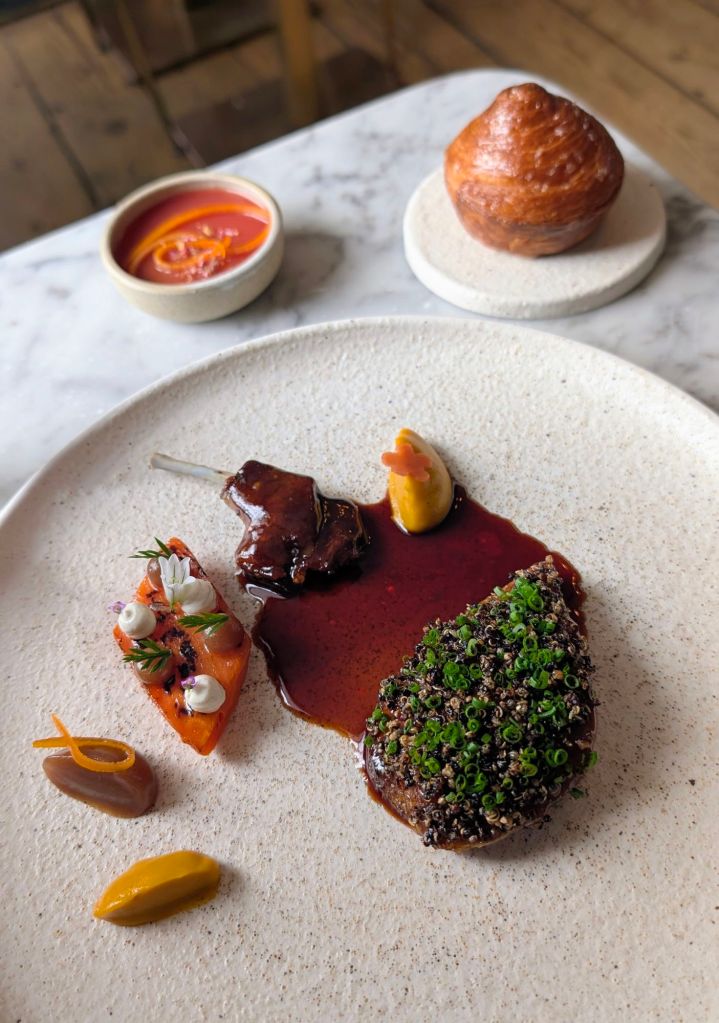
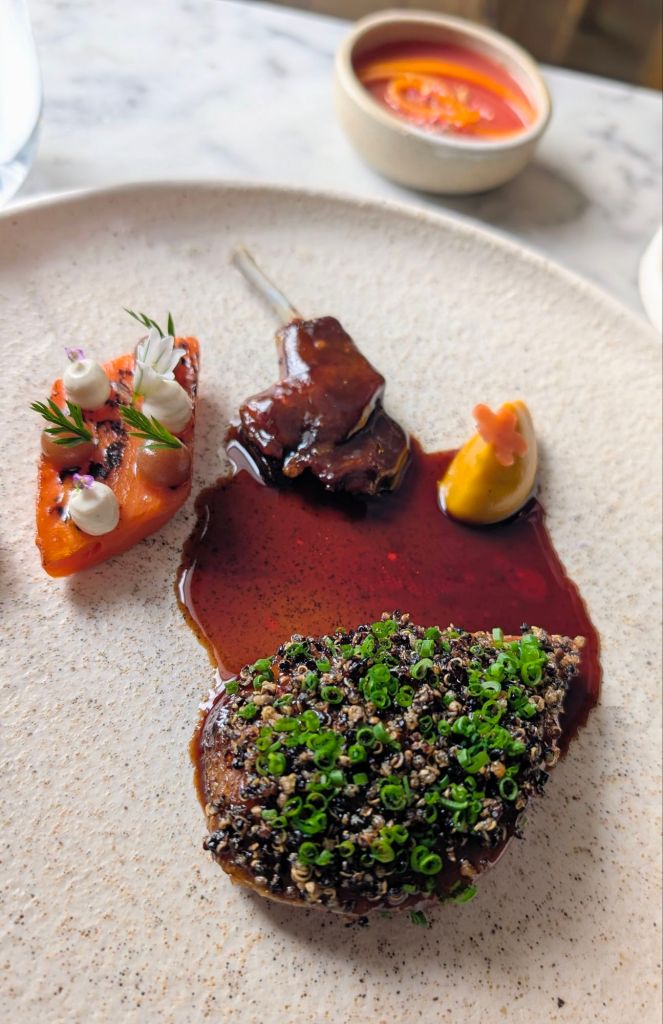
The Royal Anjou squab pigeon was another standout. I have had several failed attempts to embrace pigeon in the past, but Restaurant 22 finally managed it. The bird is cooked whole to keep it perfectly pink and juicy, avoiding that livery punch or gamey flavour that usually puts me off. The breast is finished with a coating of quinoa and roast crumb with fresh chives, adding a delicate and colourful crunch that complements the rich meat with a hit of freshness.

The real depth comes from the sauce. The waitress explained that it is a pigeon, port, and red wine reduction infused with harissa. The dark sweetness of the port and the bright acidity of the blood orange were exactly what was needed to balance the meat, while the spice provided a warming hum that lingered on the palate.

Alongside the roasted breast is a piece of pigeon on the bone, confit until perfectly tender, which you are welcome to eat with your hands if so desired. This is paired with a dollop of velvety purée and a roasted wedge of sand carrot (sourced from the dunes of Normandy) which offers a delicate sweetness. A smooth rose harissa completes the dish, adding an aromatic heat that balances the richness of the meat.

To go with it, they serve a 24-layer laminated brioche. By eye it looks rather simple, but the bread is incredibly buttery and sweet, and you can actually taste each crispy layer as you bite into it. It’s another example of taking something ordinary and making it exciting, especially when used to mop up that rich reduction. Never underestimate anything from Sam Carter and his Restaurant 22 team.
Tomlinson’s Yorkshire rhubarbginger and crème fraîche
A refreshing highlight towards the end of the meal was the Tomlinson’s Yorkshire rhubarb with ginger and crème fraîche. It was exactly what was needed after a rather heavy couple of courses and reminded me of eating Angel Delight as a child, only this was on an entirely different level of refinement.
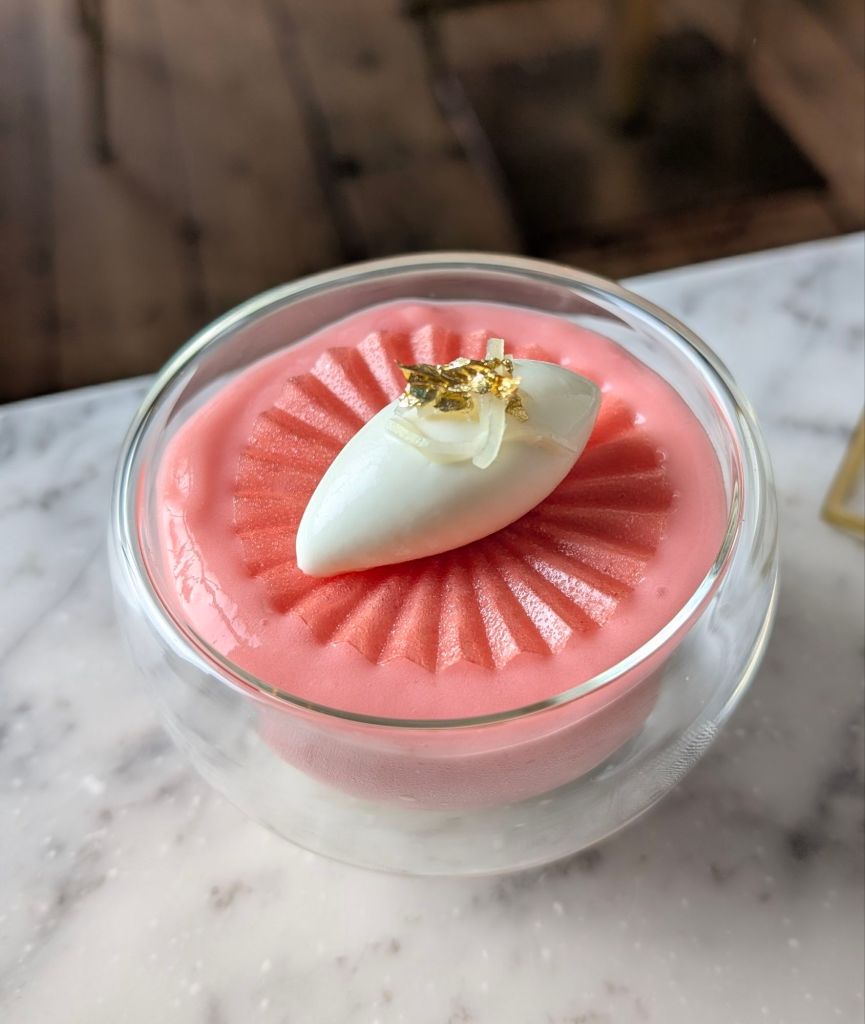
What I find most impressive about Sam’s approach is that while he is a fierce champion of local produce, he never lets it limit the quality on the plate. If a local ingredient isn’t the best available, he isn’t afraid to look elsewhere to ensure the standard remains high. The Tomlinsons are a perfect example of this. They have been traditionally harvesting rhubarb by candlelight in Yorkshire for four generations, and that expertise shows in the vibrant colour and delicate sweetness. The sharpness of the rhubarb and the warmth of the ginger really stand out, providing a refreshing stop before the final sweets arrived.
The Chocolate and Coffee Dessert
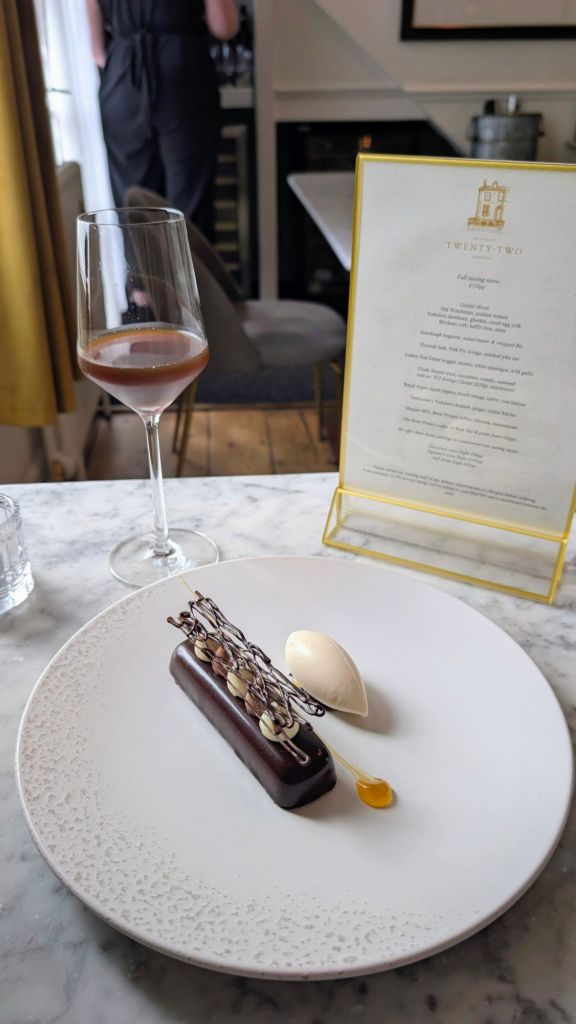

To finish, we had a chocolate brownie base layered with soft salted caramel and a coffee cream, topped with toasted almonds for texture. Made from 64% Manjari chocolate, the coffee comes from Brew Project in Ely (actually one of my favourite roasters) and but quality really comes through in the creamy mascarpone. Visually, it was a beautiful but minimalist presentation; the clean, precise layers were almost too perfect to break into, but once you did, they made a satisfying snap. They gave way to a bold intensity that didn’t feel overpowering, making it a rich and decadent way to wrap up the afternoon.
Service and Deadlines
The staff are incredibly warm and attentive, but it is their technical knowledge that really stands out. They don’t just know the menu; they understand the logic behind it. Because the restaurant is essentially an old townhouse, space is naturally limited, but the team manage it brilliantly. They are on it the second something is needed, yet they manage to stay out of the way by lurking in the shadows of the hallway with eagle-eyed precision.
The team managed to be friendly and chatty without ever being intrusive, making the whole afternoon feel like a genuine conversation rather than a formal transaction. It is that combination of real skill and honest hospitality that makes Restaurant 22 such a special place to eat. You aren’t just being served; you are being looked after by people who are clearly passionate about the craft.
Nostalgic treats

To round off the afternoon, I was treated to a selection of petits fours brought out to the table by Sam Carter himself. It was a great touch to have the head chef personally present the final bite of the day. He explained that these sweets are inspired by his own childhood favourites, though refined significantly for the restaurant. The selection included a remarkably smooth fudge made with local dairy milk and a rich dark chocolate truffle finished with sea salt. It was a thoughtful, nostalgic way to end the service, and having Sam take the time to come out and chat made the whole experience feel that much more personal.
If Cambridge was a restaurant
Ultimately, Restaurant 22 is a great example of how to evolve a historic space without losing its soul; it feels like a true reflection of the Cambridge identity. By keeping the layout and charm of the Victorian house, Sam and Alex have created a setting that feels personal and warm, providing the perfect backdrop for food that is technically excellent yet deeply nostalgic.
As a humble food blogger who has sometimes felt like fine dining can be wasted on me, I found that Restaurant 22 has a way of making the experience feel grounded and accessible while still providing an elevated experience. It opened me up to new experiences (like the pigeon) and demonstrated what can be done with old favourites by pushing the boundaries of what is possible. Furthermore, having championed local industry for nearly two decades, I was incredibly impressed and touched by their dedication to celebrating local sourcing and lifting up other Cambridgeshire businesses. Sam may even be more passionate about this than me!
I now understand why Restaurant 22 attracts such a dedicated following of both visitors and locals. For those coming from further afield, it offers the chance to experience the very fabric of Cambridge through its flavours. For those of us who live here, it is a way to taste our own culture and heritage, elevated by a team that truly cares about the region.
Whether it is the 24-layer brioche or the nostalgic trip down memory lane with the sweets, every detail feels considered. It may have taken me longer than it should have to finally visit, but it certainly won’t be my last time at the table. It is, quite simply, the standard by which all other dining in the city should be measured.
Thanks for reading.
Thanks for reading









You must be logged in to post a comment.