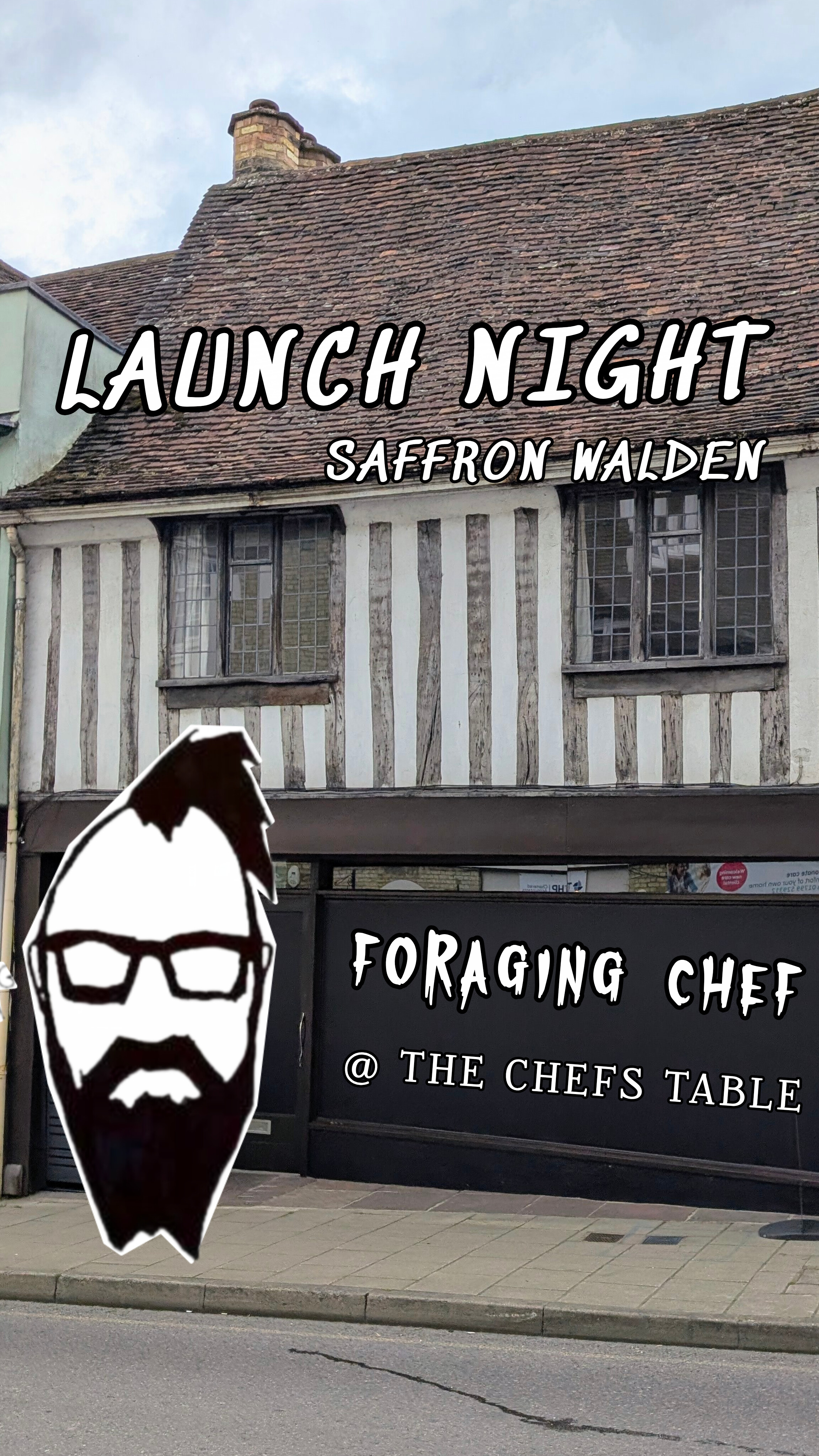
“ad” – Why is this here?
Once in a while, a dining experience comes along that not only blows you away but has you thinking about it for days after. It challenges everything you thought you knew about the culinary arts but also makes you realise what you’ve personally forgotten about food as an individual (and maybe even us as a whole society). Perhaps it even changes the way you look at food forever?
This is exactly what I experienced at the launch night at The Foraging Chef.

I rarely venture out of my usual Cambridgeshire bubble, but the launch evening for the Foraging Chef was such a fascinating concept, the foodie in me simply couldn’t resist. I remember reading about Chef Kareem Roberts experience at a pop up event back in 2023 and being incredibly impressed by his level of enthusiasm, so I decided to brave the border into Essex and pay Saffron Walden an overdue visit. I had forgotten how remarkably close the town it is; for anyone put off by the distance, I can safely say that this is an experience worth the extra effort.

At the heart of this adventure is a chef whose commitment to foraging and hyper-local sourcing is nothing short of exceptional. The lengths Chef Steve Thompson goes to are, quite frankly, unbelievable. He isn’t just ordering from a brochure; he’s out there in the elements, personally tracking down wild ingredients like hogweed, ribwort plantain, and dandelion from the hedgerows, and sourcing everything else from a tight-knit circle of local businesses (like the butcher in Saffron Walden and the brilliant Flourish Farm). In fact, he said that everything consumed this evening can be found within “walking distance of this restaurant”.
This isn’t just a dinner; it’s an education. You are being reintroduced to ingredients that have been completely wiped from our diets by industrialisation. It’s a journey that connects you to a heritage you didn’t even realise you had lost, and it hits home in a way that feels both deeply personal and profoundly real.

The place is hidden in plain sight on the Saffron Walden High Street, being entirely blacked out. I was honestly doubting whether it was even open when I arrived. There’s something about that veil of secrecy, though, as it felt like I had stumbled onto something forbidden. I even saw a lady drive past pointing at it while outside. Reading her lips, you could tell she was saying, “What’s that!”. Clearly a bit of mystery works.

Once you enter, the place is entirely blacked out on the inside too. This is done on purpose, creating a sense of timelessness that strips away any distractions and forces you to focus on the only colour in the room: the people and the food. If you think that sounds sterile, think again. The space is set up to be completely social, with all 15 seats arranged along a bar that wraps around the kitchen. It’s like sitting in a friend’s home while they’re cooking for you while you happily pound wine.
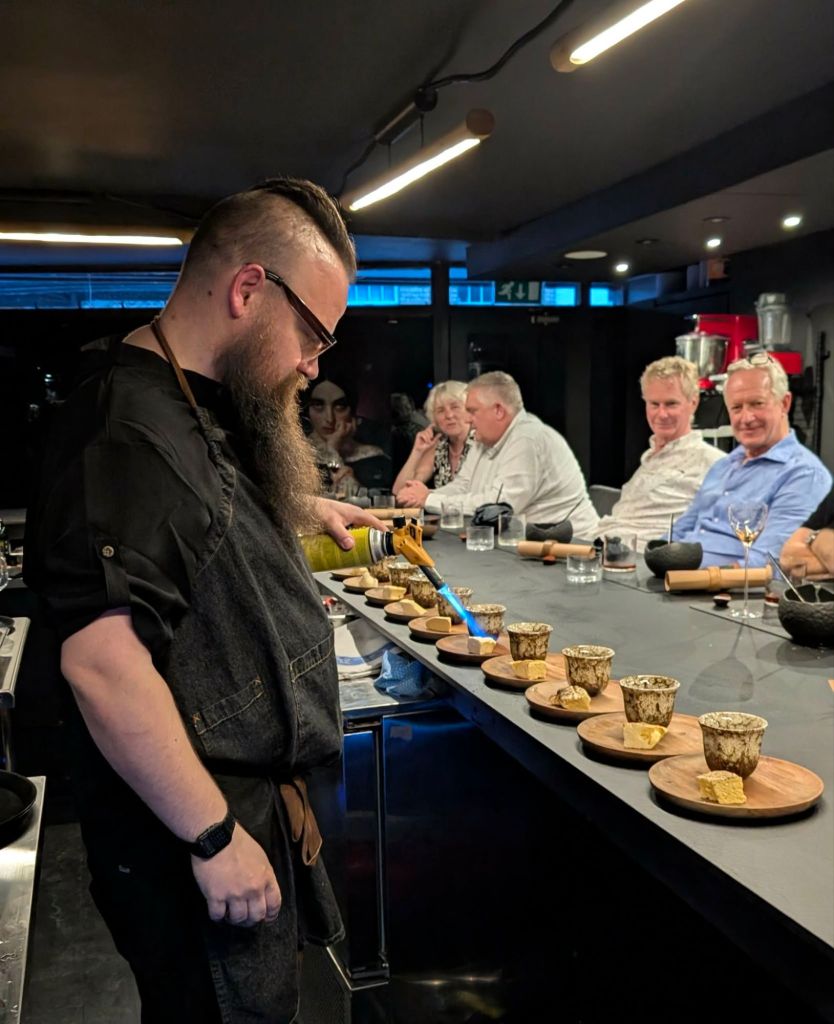
I love this setup because it forces you to talk to the people next to you, instead of just hiding away at your own private table. It is casual, intimate, and social. And because Steve keeps the numbers small, he’s has the time to talk you about his journey into foraging, going into details like where each ingredient came from or the story behind the food. He is also able to answer any questions you have while he’s prepping in front of you – and trust me, you will have plenty!
It made me realise how disconnected most dining can be. By sitting at a private table while food is brought out from some secretive back room makes me feel just how isolationist it can be. Seeing the kitchen right in front of you is a huge show of confidence, and it’s genuinely reassuring to see how clean and transparent everything is. And the vibe is the most relaxed I’ve seen in a fine dining setup. Especially with proper music playing, like Led Zeppelin, Pink Floyd, Nirvana. It felt like a high-end dinner party with cool people. Honestly, I’m not sure I can go back to the old way of dining after this. I need more!
The Menu
The menu can be found here.
The experience is fully prepaid, which makes for a nice, seamless arrival (no faffing about with bills at the end). For lunch, you’re looking at a five-course menu for £80 per guest, while the full dinner service is a 12-course behemoth for £150 per head. Just make sure you get your dietary requirements and any preference for the non-alcoholic pairing over to them by email before you book, as everything is prepped to order and they can’t always shift things on the night.

The best part is that the drinks are included in that price, featuring a flight of hand-picked, thoughtfully paired wines and spirits curated by Steve and Cong Cong Bo. Having Cong there was an integral part of the experience as she brings an encyclopaedic knowledge to the table, explaining the science behind each pairing as it’s presented with a sharp, no-nonsense passion that makes you see the wine in a whole new light. If you can’t get a seat at the table with Steve, keep an eye out for her independent wine pop-ups around Cambridge – she’s always doing something interesting.
Elderflower, Gin, Koji & Pine Pollen
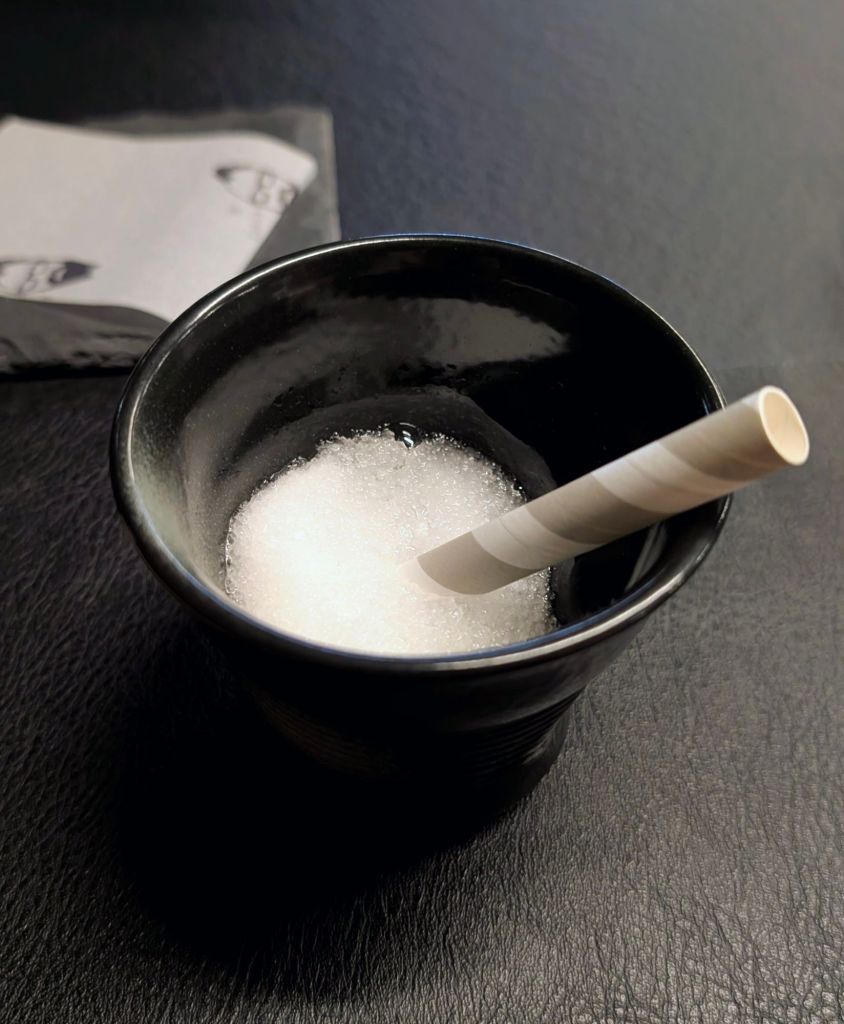
We kicked things off with a drink that set the tone for the evening: a punchy blend of gin, elderflower, koji, and pine pollen. It hits hard, and the gin definitely dominates, demonstrating that Steve is here to have a laugh and wants you to let your hair down for the evening. While it has that classic, recognisable kick of a London Dry, you get the floral hit of elderflower pulling through behind it. You can just about catch the koji and pine pollen, too, which adds a wild, earthy depth that tells you straight away this isn’t your typical, safe tasting menu. It’s a drink that slaps you in the face and asks, “Are you ready?”
Dandelion Pie & Curd
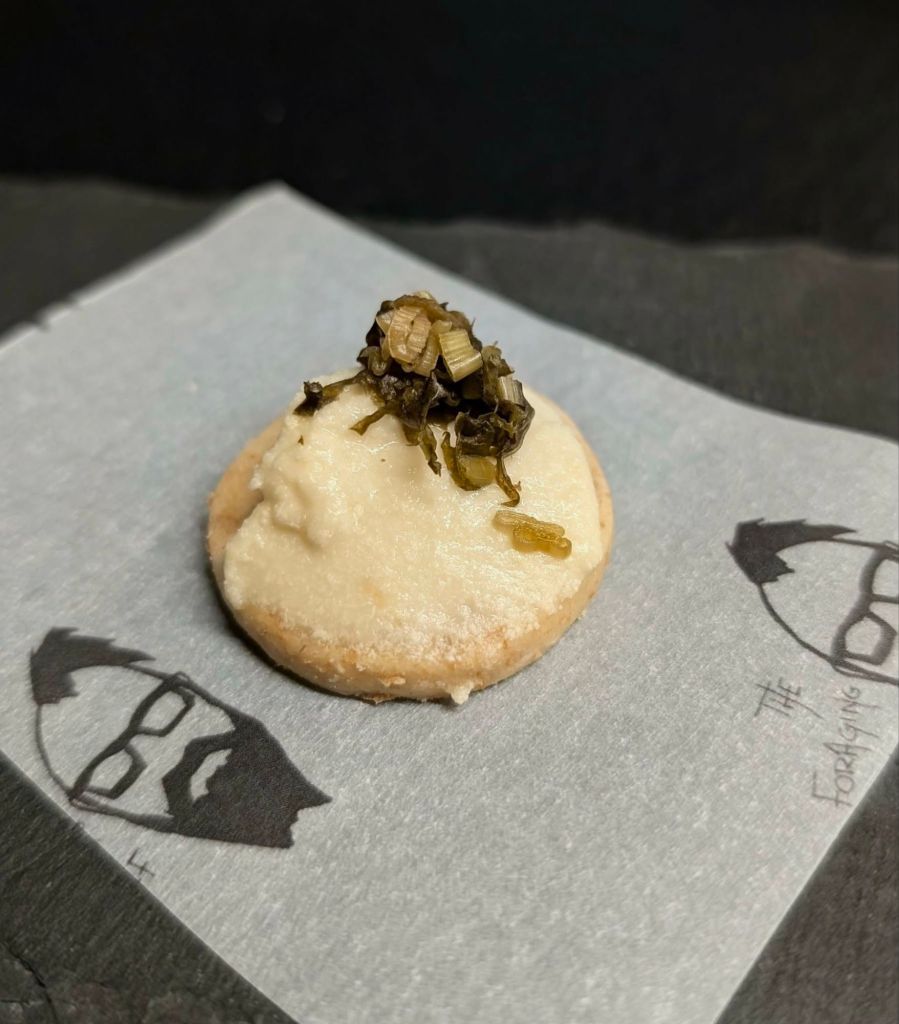
“Whereas many people look at a dandelion and see a weed, Steve sees a plate of food. It was sharp, earthy, and carried a depth of flavour you simply won’t find in anything mass-produced. Because it’s foraged, you know it’s pesticide-free – the wild version of organic, without the regulatory rubber stamp. I loved the way the cool creaminess of the curds met the golden crunch of the pastry. It was a dish that played with expectations; you look at it and assume sweetness, but instead, it arrived with a savoury, herbaceous edge. It’s a total curveball that forces you to realise how much flavour we ignore in our own gardens just because it isn’t sold in a plastic packet. It made me think about the disconnect between our expensive supermarket trips and the high-quality food growing under our noses – and I couldn’t help but wonder how much better off struggling families might be if they could utilise the ingredients waiting to be picked, entirely free, just around the corner.
Lamb Scrumpet with Jack by the Hedge & Roe
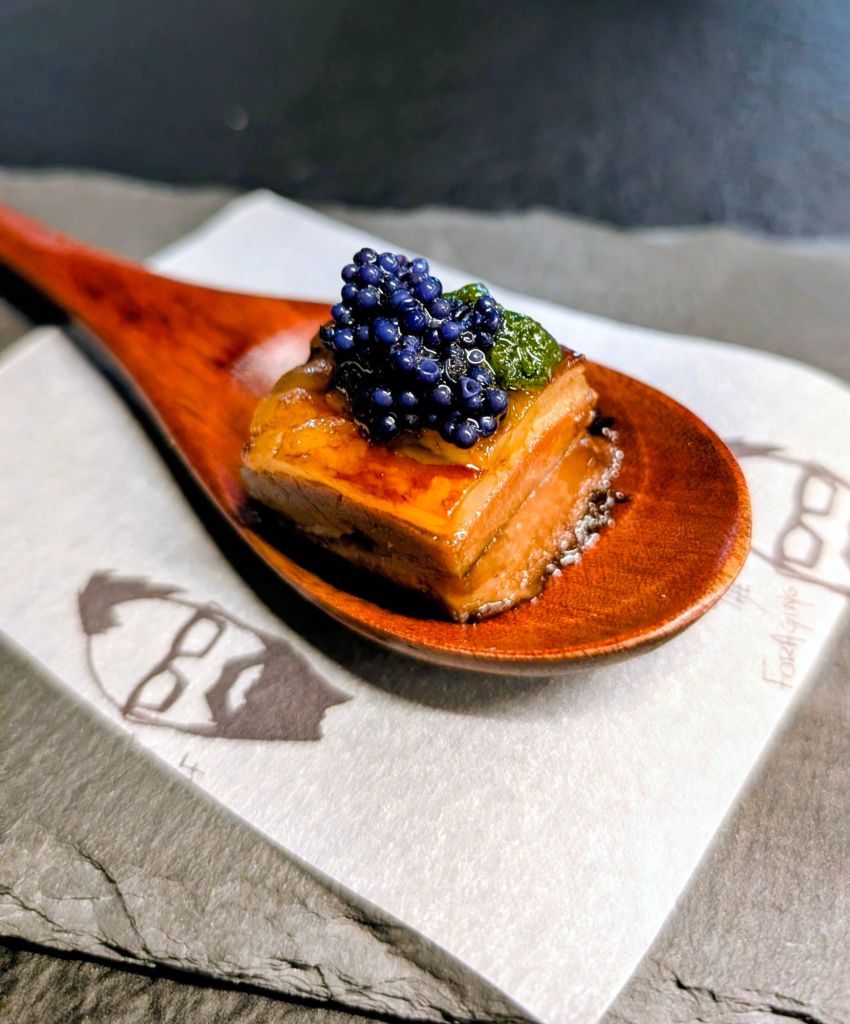
Sourced from a local farm just down the road, this lamb scrumpet really showed the value of hyper-local sourcing. Served as a small, neat square on a wooden spoon, it was a reminder that when you get your meat from within walking distance, the quality speaks for itself without needing to overcomplicate the preparation. I loved the way it was presented, and the contrast of the crispiness of the lamb fat against the soft, fatty middle was spot on. That richness was brought to life perfectly by the bursting, salty flavours of the roe.
Hogweed Pottage with Hen of the Woods & Einkorn with Deer Fat Crumpet with Nettle & Magnolia


This duo arrived together on the slate, and it was a brilliant pairing. The Hogweed Pottage, served in a wooden cup leaning into the rustic theme of foraging which flew in the face of your more typical fine dining ceramics. The pottage really hammered home the level of expertise needed for foraging as you really need to know your stuff to distinguish the safe Common Hogweed from its toxic cousin, the Giant Hogweed. It is a stark reminder that when you are eating something plucked from a hedgerow, you are placing your complete trust in the chef’s botanical knowledge – the difference between a delicious soup and a dangerous mistake is entirely dependent on his skill. As for the flavour, the pottage itself was thick and earthy, while the Hen of the Woods added an almost deep, meaty umami.
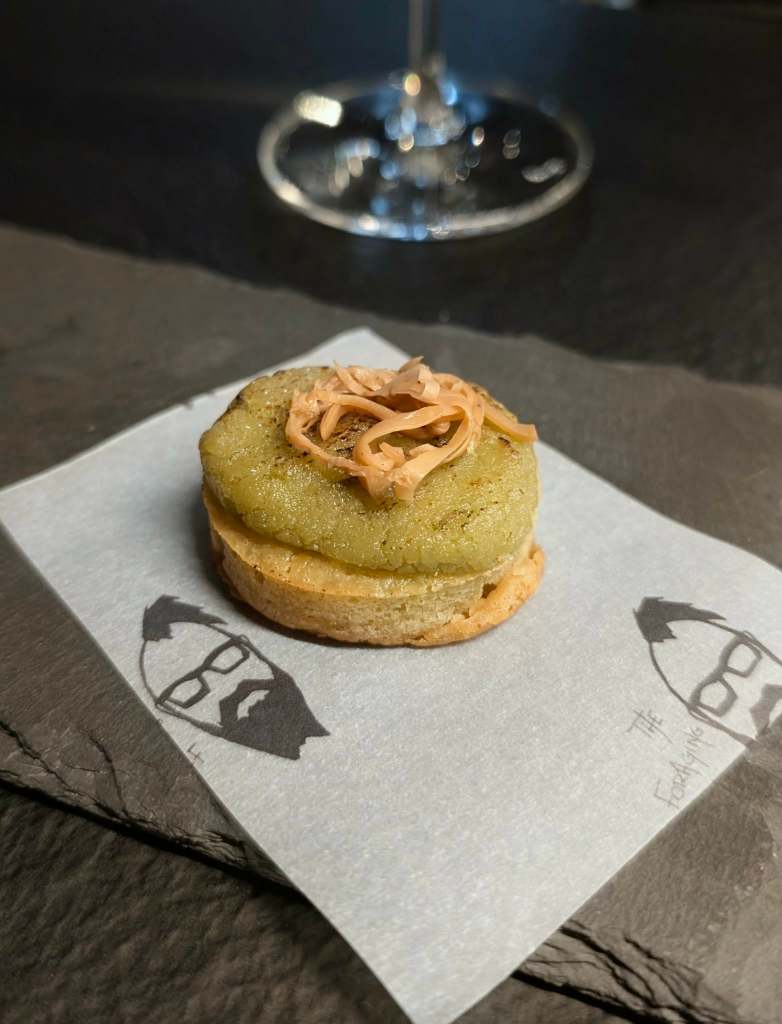
Sitting alongside it was the Deer Fat Crumpet with Nettle & Magnolia – a completely original concept refined into a single mouthful. I found myself closing my eyes to focus on these new, unusual flavours; when a dish is this complex, you really need to give it your full attention. The crumpet, cooked in deer fat, brought a surprising richness and depth that the pale colour didn’t suggest. I expected the nettle to provide a sharp, aggressive kick, but it was surprisingly subdued, lending an earthy, verdant quality that was much milder than I’d anticipated. It’s exactly the kind of pairing that makes you realise how much potential is being left to wither in our own gardens. Steve needs to hurry up and release a cookbook!
Roast Potatoes with English Spices & Medlar
The roast potato, seasoned with English spices and paired with medlar, was a fascinating take on a Sunday roast staple. Roast potatoes are rarely given this level of attention in a meal, often serving as a blank canvas for gravy or a dollop of sauce, but here it was transformed into a centrepiece that forced you to focus on it in its entirety. I really enjoyed this foraged take, though the potatoes themselves didn’t quite do it for me. They were well received around the table but I found that they were tough and mostly skin, which served as a stark reminder of why we moved away from this kind of sourcing as a society. When you rely on what you can find rather than shopping for consistent, uniform produce, you lose that guaranteed minimum quality.
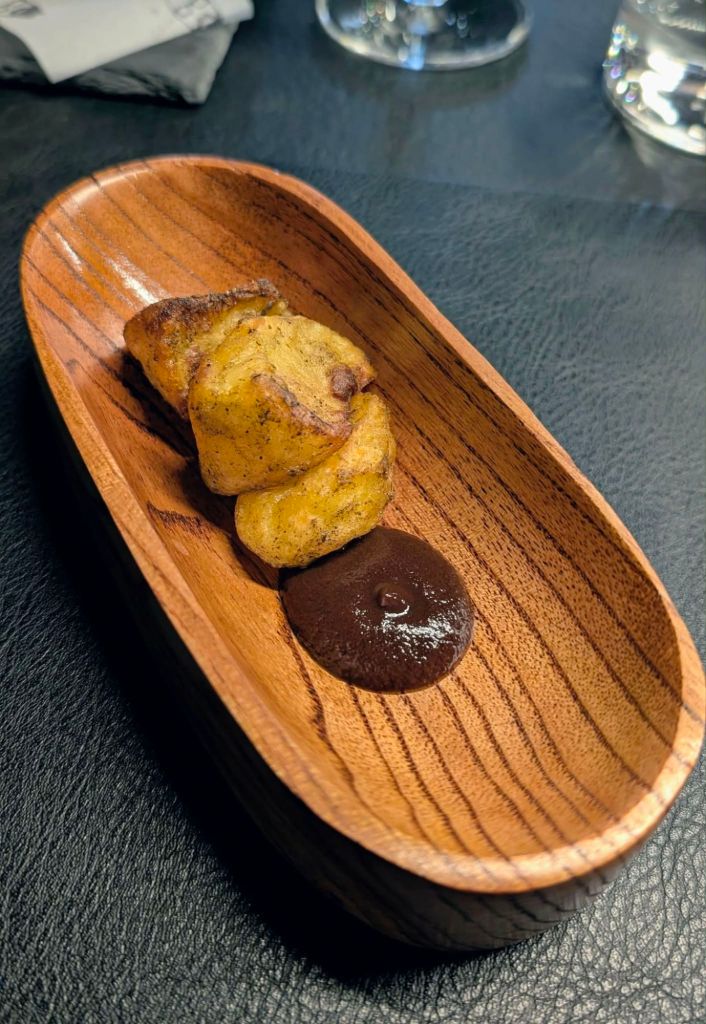
That said, the Medlar acted as a dollop of sauce on the side that became an instant conversation starter. People around the table were comparing it to the likes of HP or Daddies, but this was something else entirely. It had an earthy complexity I couldn’t quite put my finger on – a flavour I’ve simply never encountered before. It carried a mild, tangy sweetness that felt entirely natural, a million miles away from the sugar-laden, processed versions we’re all used to. It really makes you question what our food is actually supposed to taste like when you strip away all the processed crap.
Dewberry, Beetroot & Elderberry
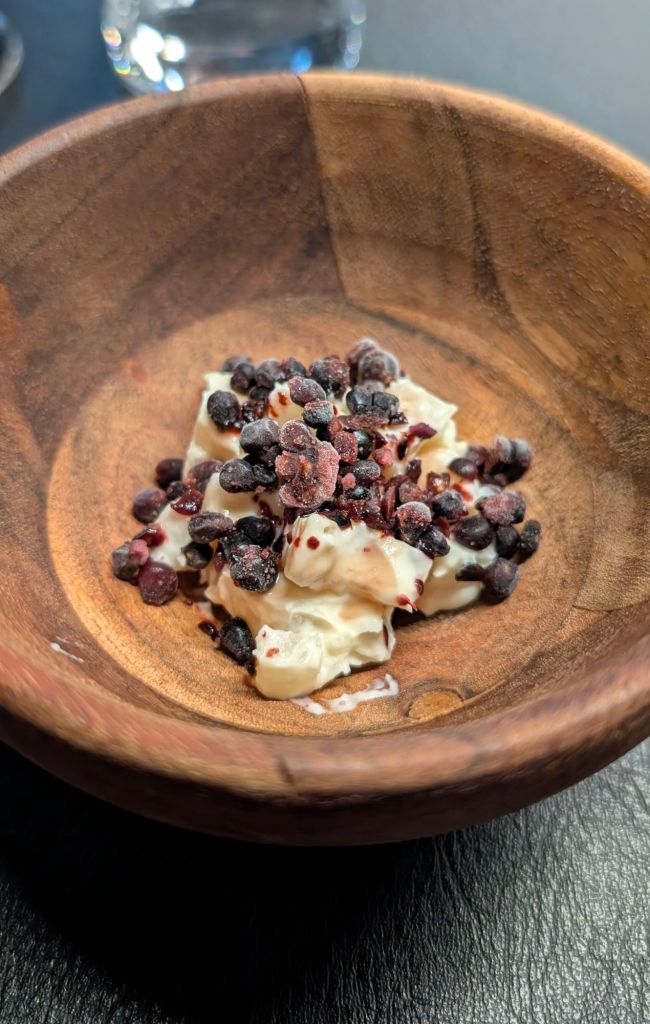
This was the perfect bridge between the savoury and the sweet. Steve paired the earthy beetroot with the sharp, bright notes of dewberry and elderberry. These three were all packed with a freshness that gave an almost wild intensity of flavour you just don’t get from stuff off a supermarket shelf. The beetroot brought a sweet, earthy depth that held its own against the tart, juicy pop of the dewberry (which is essentially just a blackberry’s sharper cousin) and proved that if you know your way around a hedgerow, you can make roots and berries taste better than any ‘premium’ stuff you’d pay a fortune for.
Wild Fennel Schnapps, Fir Cordial, Egg White & Kefir

I haven’t included all the wines and drinks from the experience, but I had to mention the Wild Fennel Schnapps with Fir Cordial, egg white, and kefir as it was a fascinating bit of experimentation. It had a real aromatic character, while the kefir added a tang and the egg whites crept through with an assertive aftertaste. It’s not something you’d drink a pint of as it has a rather potent flavour, but it definitely makes you sit up and pay attention to how different foraged flavours can work together. It was unusual, entirely different, and I’m genuinely glad I tried it. Plus, the kefir is a nice bonus for your gut health.
Ribwort Plantain with Hazelnut & Alexanders Seed

This was my personal favourite of the night. The hazelnuts were incredible, hitting you with a punch of fresh flavour right out of the gate and reminding me that when you forage, you’re eating ingredients at their absolute peak. That crunch worked perfectly against the creamy base made from Ribwort Plantain. While people usually go on about its medicinal side, here it just added a brilliant, almost mushroomy(?) depth that paired up perfectly with the Alexander seeds. You get a delicate, peppery kick from those seeds that I honestly loved. It was a dish that tasted absolutely nothing like it looked, being one of the best examples of the numerous surprises and curve balls experienced this evening.
Grey Gurnard with Bladderwrack & Ramson

The Grey Gurnard with Bladderwrack and Ramson was an excellent dish to gently move into the more meat focused part of the journey. The fish is primarily found off the southern coasts of England and you could really taste that freshness; it was light, delicate, juicy, and (like most of the dishes tonight) reminded me of an almost shellfish taste. I couldn’t help but imagine Steve sat patiently on his boat with a rod just to catch one for our plate. Bringing in the bladderwrack (seaweed) saltiness while the ramson (wild garlic) added a garlicy hint that politely popped up in the palate. It felt like a proper snapshot of the wild British coastline on a plate.
Cottage Loaf with Pine Cone & Sunflower Seed
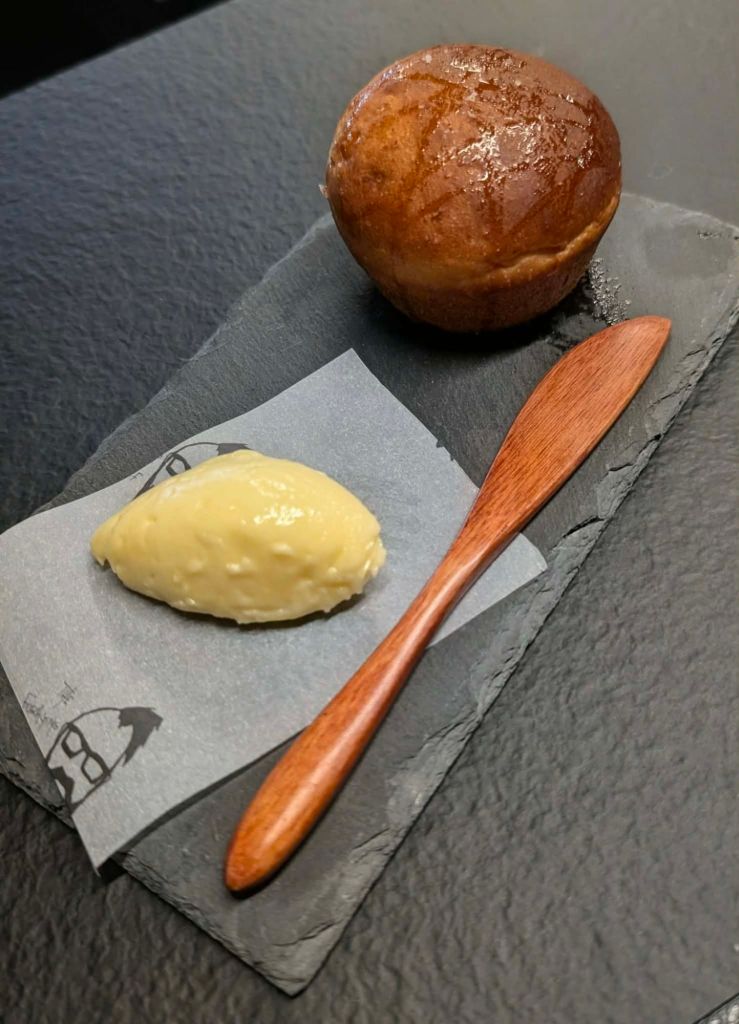

The bread course was another popular dish around the table. The rustic cottage loaf ticked every box – fresh, soft, and sweet. It arrived with a side of pine cone and sunflower seed butter, which was soft, complex, creamy, and unusual. I was encouraged to tear the bread with my hands rather than cut it with a knife, reminding me that though this may be fine dining, you can get stuck in and be yourself. One of the many reasons why The Chef’s Table is dining with attitude.
Wood Pigeon with Green Walnut, Crow’s Garlic & Lentil
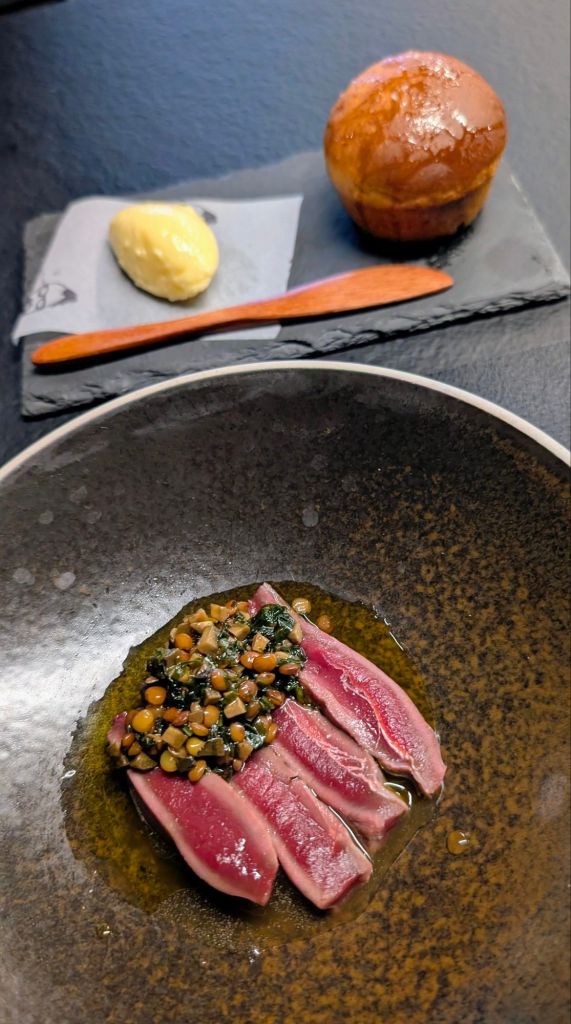

This course was a proper celebration of game. The wood pigeon was cooked perfectly, with a stunning pink and red centre and a tenderness that reminded me of steak. The garnish of lentils, green walnuts, and crow’s garlic brought an almost pungent, bitter edge to the plate. It added a bit of texture that stood up to the richness of the meat, combining into a deep, earthy woodland flavour that felt like it had been pulled straight from the wilderness of Essex. I could tell that this might not be for everyone but you don’t come to the Foraging Chef and not expect to have your concepts and taste buds brought out of your comfort zone – which is exactly why I loved it.
Muntjac Stew & Dumpling with Cow Parsley, Barley & Trooping Funnel

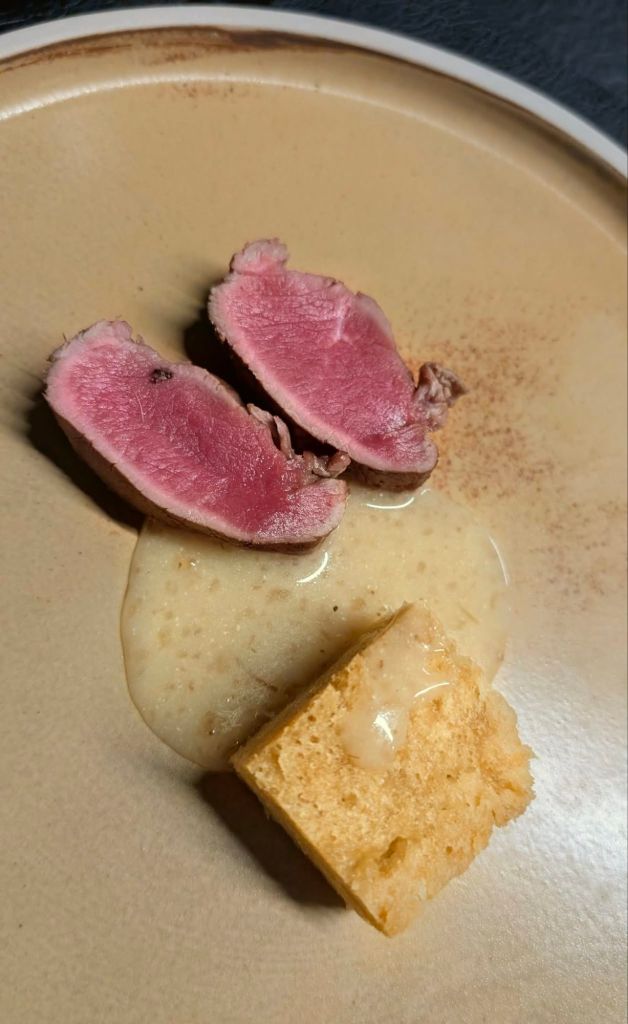
I see Muntjac frolicking across the fens of Cambridgeshire almost daily, but I’d never actually eaten one – despite having always wanted to. Between that and the little bugger that keeps raiding my bins at night, this felt like long-overdue revenge. I’d always been curious about the flavour, half-expecting it to mirror pigeon since the meat looks so similar, but it was a different experience entirely; it had a much milder, gamey taste closer to venison or maybe even beef. The dumpling added a light, savoury element that acted as a perfect canvas for the trooping funnel mushroom stew, making it a well-balanced meal in its own right. For anyone thinking of visiting who is unsure about fine dining and worries about leaving the table hungry after spending their hard-earned cash (I know there are many of you out there), this proves that won’t happen, as it is a hearty dish.
Mahonia Jelly & Sour Ice Cream

The Mahonia jelly provided a sharp, fruity hit that cut right through the richness of the previous courses. The sour ice cream was just what I needed after several heavy and gamey plates, offering a clean, refreshing finish that stripped the palate back for the final, sweet courses. It is a simple dish, but an important one; it symbolises the transition from the heavy mains to the final act of the experience (desserts). It doesn’t mess about – it just does the job, and it does it well.
Meadowsweet with Kelp & Apple

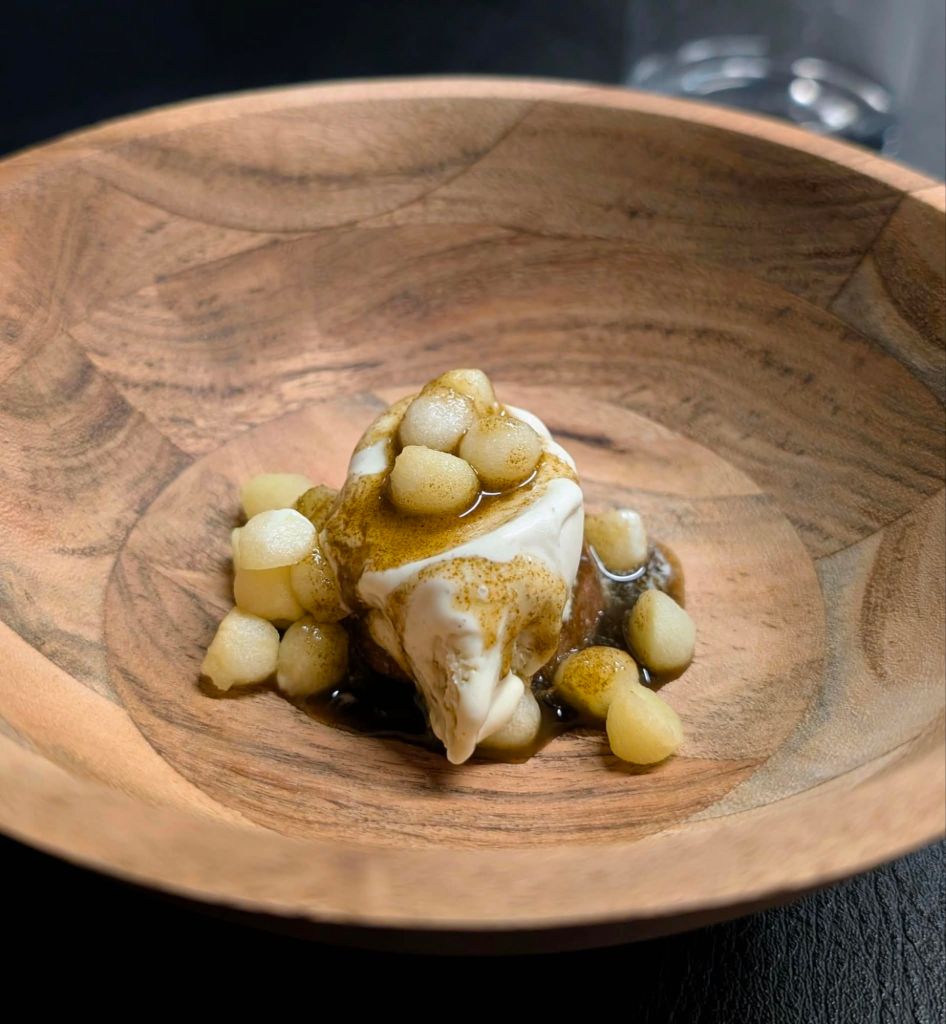
This was a course that truly shocked the palate. Using the meadowsweet plant – a flavour usually found in flowers – it delivered a sweet, marzipan-like profile with a complex finish. It was refreshing, bold, and entirely unexpected, especially when paired with the apple and kelp elements adding a sweet and umami flavour.
Sticky Mushroom Pudding with Dryads Saddle, Sweet Woodruff & Miso
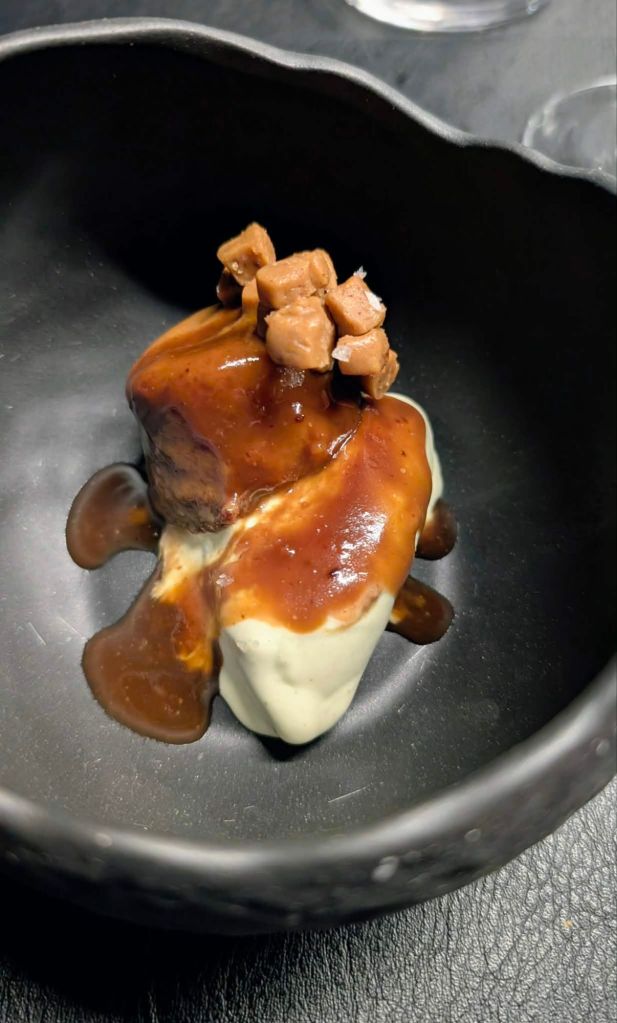
I always knew that mushrooms were going to be a common feature during this experience, but even still, closing with a sticky mushroom pudding felt like a bold move. Dryad’s Saddle has a mild, nutty flavour, so it’s a surprisingly good choice for a dessert – and it truly worked. The miso added a salty, savoury richness that grounded the sweetness, turning a classic British pudding on its head. It’s not your average sponge, but it was a refreshing and creamy sign-off to an absolute rollercoaster of a dining experience that has turned so much of what I thought I knew about food on its head.
More Than Just a Meal

My experience at The Foraging Chef’s Table was so much more than just a dinner; it felt like being taken back to school. It was a proper education on the ingredients growing right under our noses, and I’ve walked away with a completely different perspective on what our local landscape is actually capable of. Having the kitchen right there in front of us and getting to chat with Steve about where he’d foraged each piece of the puzzle (and why it mattered) turned the evening into a fascinating lesson in forgotten heritage.
I have purposefully left out some of the specific foraging details from this review; you need to go and learn that for yourself. Hearing it directly from a man as fun and passionate as Steve is the only way to truly experience this.
This has been one of the most interesting, delicious, and experimental experiences of my life. As someone who takes huge pride in our local area, I think this is an absolute must. It’s such a unique concept that it is worth travelling for, whether you’re from just across the Cambridgeshire border or the other side of the country. I already have a list of people in mind who would absolutely adore this (I’m looking at you, @seanfigura) and I’ll no doubt be back myself. If you want to see what our countryside can really do, get it booked.
Thanks for reading – Don’t forget to follow us on Instagram




You must be logged in to post a comment.